INTRODUCTION
Commercial water safety is a legal and operational responsibility for organisations that manage, own, or occupy buildings in the UK. Poor control of hot and cold water systems can expose occupants to serious health risks and place organisations in breach of their legal duties.
This guide explains what commercial water safety means, who is responsible, and how compliance is typically achieved in UK commercial buildings. It is written for duty holders, facilities managers, landlords, and organisations responsible for maintaining water systems.
This site focuses on prevention, risk management, and compliance, not emergency plumbing or sales-led advice.
WHAT IS COMMERCIAL WATER SAFETY?
Commercial water safety refers to the management and control of risks associated with water systems in non-domestic buildings.
These risks include:
- Growth of legionella bacteria
- Scalding from hot water outlets
- Contamination due to stagnation or poor circulation
- Backflow and cross-contamination
- Inadequate monitoring, testing, or maintenance
Commercial water safety applies to buildings such as:
- Offices and workplaces
- Hotels and hospitality venues
- Care homes and healthcare settings
- Schools and educational buildings
- Leisure centres and gyms
- Multi-occupancy residential buildings
Any building with shared or centrally managed water systems falls within scope.
WHY COMMERCIAL WATER SAFETY MATTERS
Failures in water safety management can lead to:
- Serious illness or fatality
- Enforcement action by regulators
- Civil claims and insurance issues
- Reputational damage
- Business disruption
In the UK, organisations have faced prosecution not only when incidents occurred, but where adequate control measures could not be demonstrated.
In practice, enforcement focuses on whether an organisation can show that:
- Risks were identified
- Controls were implemented
- Systems were monitored
- Records were maintained
Documentation and routine checks are therefore just as important as physical controls.
WHO IS RESPONSIBLE FOR COMMERCIAL WATER SAFETY?
Responsibility for water safety lies with the duty holder.
The duty holder is usually:
- The employer (in a workplace)
- The building owner
- The managing agent
- The organisation in control of the premises
Although tasks may be delegated to contractors, legal responsibility cannot be delegated away.
Common duty holders include:
- Business owners
- Facilities or estates managers
- Property management companies
- Housing providers
- Operators of care, education, or leisure facilities
Contractors may carry out inspections or testing, but the duty holder remains responsible for ensuring suitable systems are in place.
KEY RISKS IN COMMERCIAL WATER SYSTEMS
Legionella Bacteria
Legionella bacteria thrive in poorly controlled water systems, particularly where water temperatures fall within the growth range or where stagnation occurs.
Hot Water Scalding
Excessively high outlet temperatures can present a scalding risk, particularly in environments with vulnerable occupants.
Stagnation and Dead Legs
Unused outlets and redundant pipework increase the risk of bacterial growth and water quality deterioration.
Backflow and Contamination
Incorrect plumbing arrangements can allow contaminated water to enter potable systems.
HOW COMMERCIAL WATER SAFETY IS MANAGED
Effective water safety management typically includes:
- Risk assessments
- Temperature monitoring
- Routine inspection and maintenance
- Planned preventative maintenance (PPM)
- Record keeping and logbooks
- Periodic review and reassessment
Control measures must be appropriate to the building, its use, and its occupants.
There is no single checklist that applies to every building. Compliance is achieved through risk-based management, not box-ticking.
DEMONSTRATING COMPLIANCE
Organisations typically demonstrate compliance by maintaining:
- Up-to-date risk assessments
- Records of monitoring and testing
- Evidence of corrective actions
- Maintenance schedules
- Clear allocation of responsibilities
Inspectors and auditors look for evidence of ongoing management, not one-off activity.
COMMON COMPLIANCE FAILURES
Some of the most common issues identified during inspections include:
- Missing or outdated risk assessments
- No temperature monitoring records
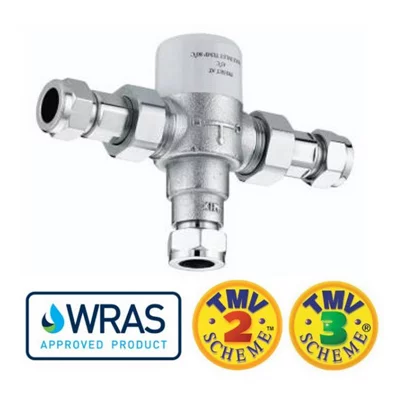
- Inaccessible or unmaintained TMVs
- Dead legs not removed
- Poor record keeping
- Over-reliance on contractors without oversight
Most failures are administrative or procedural rather than technical.
This guidance will be expanded to cover specific control measures, monitoring requirements, and practical compliance examples.